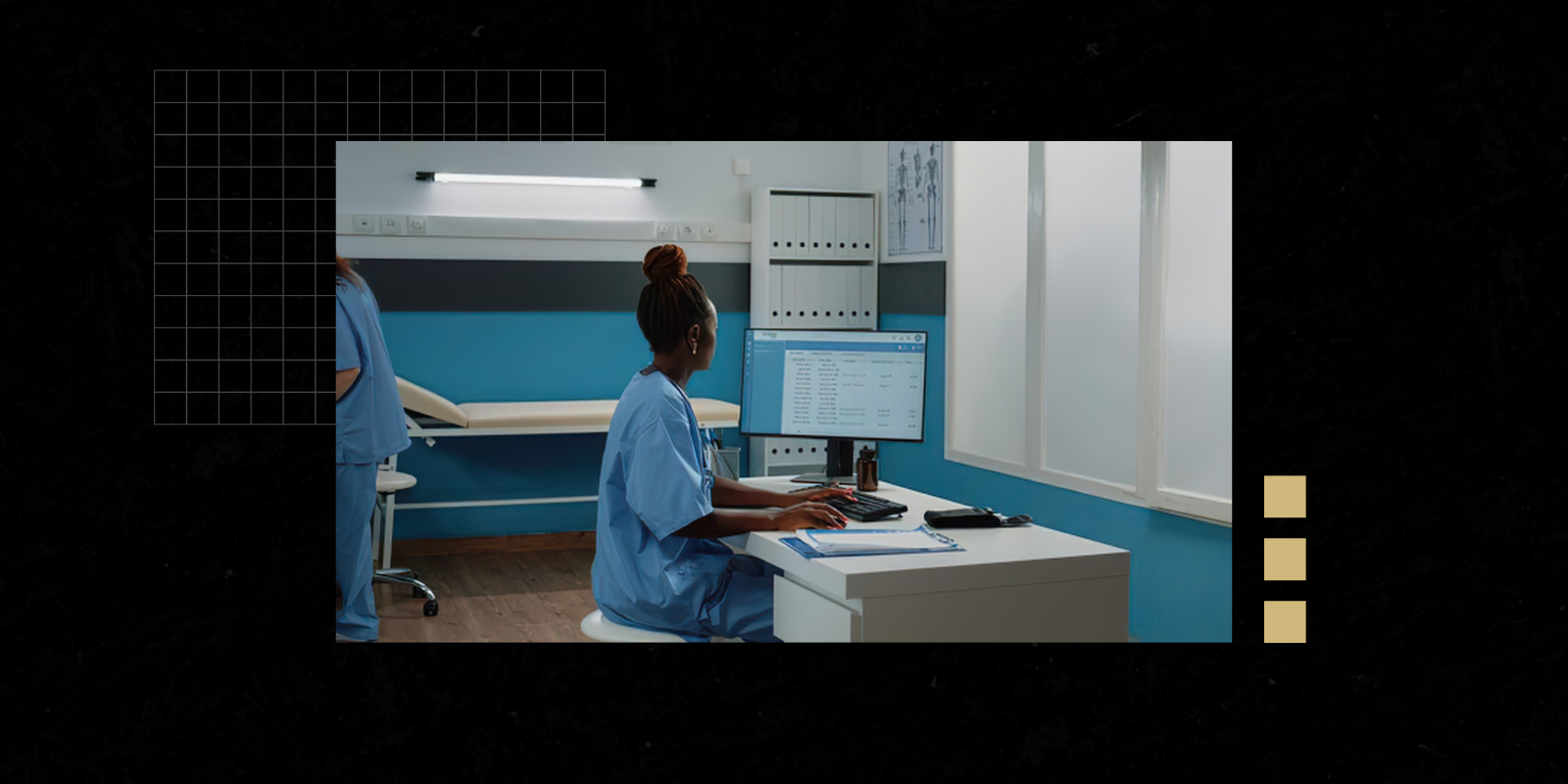
Medical students and trainees on rotation jump into the heart of health care. For Jessica Clawson, MD, that included an eye-opening experience with asynchronous electronic secure messaging systems, which allow a hospital’s physicians, nurses, technicians, and trainees to swiftly communicate with each other about the care they’re providing to patients.
Clawson says she quickly noticed how overwhelmed resident physicians around her were by the sheer volume of these secure messages.
“So, I asked myself what exactly is it that’s being sent and received on these services? That’s where it all began,” says Clawson, now a third-year resident at the University of Colorado Anschutz School of Medicine where she’s training and researching how secure messages are affecting health care providers, hospital systems, and the patients they serve.
These chat messages range from clinical care matters, which can be about routine care or urgent changes in a patient’s status, to concerns about logistics, insurance issues, and more.
Research shows that about 25% of an inpatient clinician’s day is spent in communications with other health care team members. Over the years, these systems have evolved and transformed how clinicians work. Clawson and her mentors are working to learn more about exactly how and what practices may be needed to improve the use of electronic communications systems to support the health care workforce and enhance a patient’s experience in a hospital setting.
Improvement requires data
In a recent research paper published in the Journal of Hospital Medicine, Clawson, the first author, and her CU Anschutz colleagues in the Division of Hospital Medicine write that these secure messaging systems have arrived on the health care scene “with the unintended consequence of increased task switching and a greater overall burden of communications.”
The researchers analyzed a collection of 2,706 messages sent and received by hospitalists from one weekday and one weekend day in 2023, making note of urgency, context, content, sentiment, and other features like whether an emoticon was used.
Over 365 conversations, they determined that most messages, 99%, were nonurgent. Additionally, 64% were deemed clinical in nature and 66% were “non-actionable” meaning they did not require a provider to do something.
These types of messages can cause task switching and cognitive burden – something Clawson says she hopes her research can start to address.
“We know that there is great teamwork happening in the hospital among nursing, clinicians, social workers, and everybody who helps make patient care successful, but I didn’t expect that so much of their day would be spent answering these chats,” Clawson says.
→ Learn more about CU School of Medicine's research community
“These secure message systems are ultimately a great tool because they allow for more efficient communication and more open communication. However, because of the nature of secure messaging and the way that it’s being utilized in its current form, we do see that it’s also leading to significant task switching, interruptions, alert fatigue and cognitive burden that was certainly not the intention of the platform,” she adds.
To begin to address these challenges, hospitals need research backed by data. The analysis by Clawson and her mentors is one of the first to capture and codify communication patterns on acute care medicine services.
“This type of data is foundational to understanding work patterns and developing evidence-based solutions that can transform how we work in hospitals,” says Marisha Burden, MD, MBA, professor and head of the Division of Hospital Medicine. “By examining the volume, content, and impact of secure electronic communications, we can design systems that better support clinicians and care teams – reducing cognitive load, streamlining workflows, and ultimately improving care.”
The road to optimization
Like many clinicians, Clawson says she was pulled toward a career in medicine because she wants to help people. Her work studying hospital chatter is as much a part of that passion as bandaging a wound or prescribing a medication.
“The people we take care of have much to gain from this kind of work, too,” she says.
→ More Research: Uncovering pathways for targeted rheumatoid arthritis therapeutics
By understanding the current practices around chat systems and building the foundation to optimize their use, patients experience better care outcomes.
“Research has shown that as the number of messages increase, the number of patient errors and care errors increase as well,” Clawson says. “If a clinician isn’t constantly responding to chats, they can better focus their attention on the task or interaction in front of them.”
Next, Clawson plans to dive into the experiences of what she calls “high utilizers,” the hospital staff that are sending and receiving the most messages.
“My goal from there is to use those findings and the findings from this last project to really develop quality improvement projects to ultimately maintain the same open style of communication that we have, which is great, while also decreasing the number of messages that are leading to potentially disproportionate burden relative to benefit, as relates to those alert fatigues,” she says.