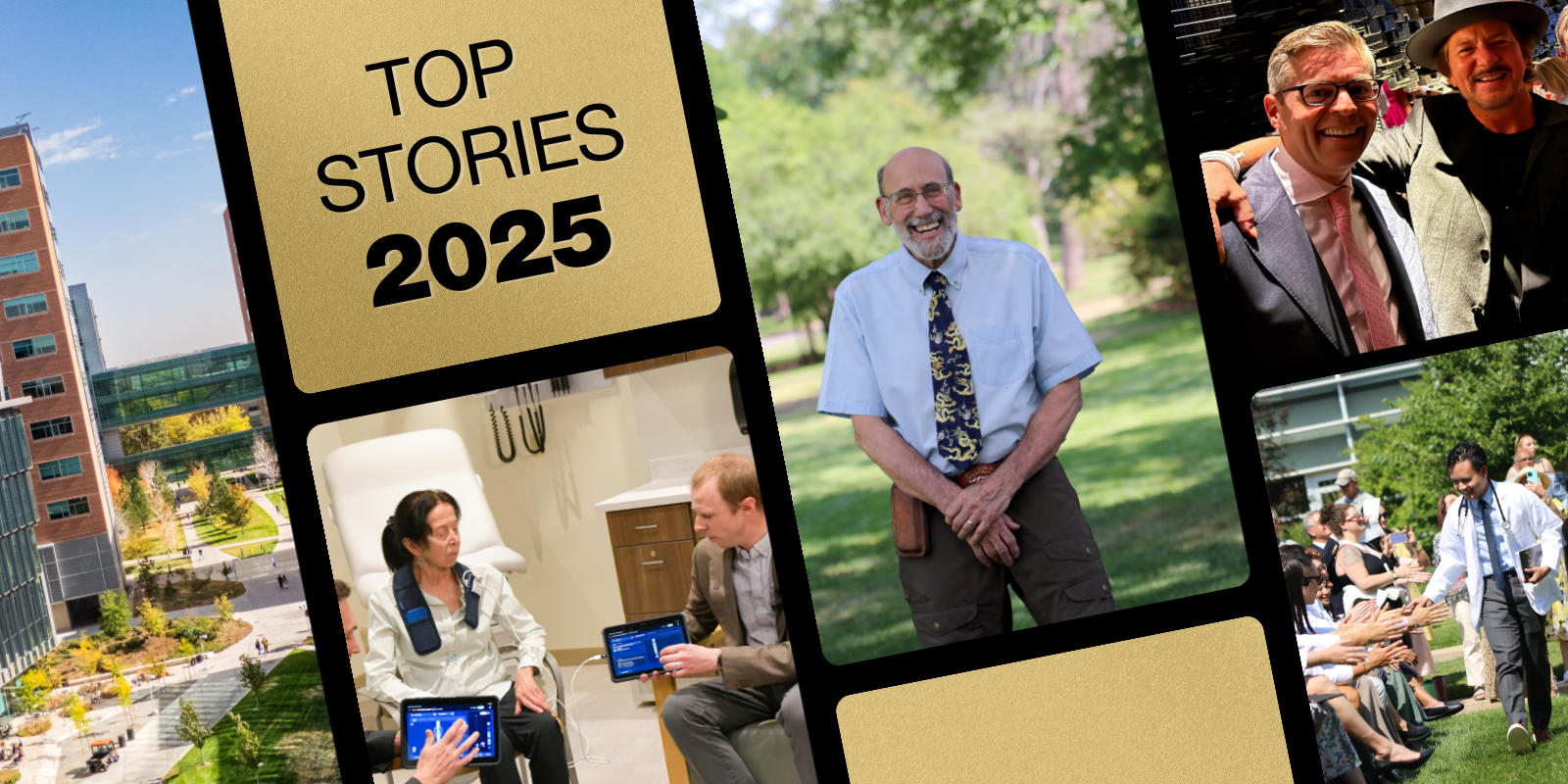
Each day at the University of Colorado Anschutz School of Medicine is full of notable moments. For some, that’s a breakthrough in the research lab. For others, it’s a fulfilling day in the clinic with patients or supporting the next generation of physicians.
In 2025, the school welcomed the Class of 2029 and celebrated the graduation of more than 180 medical students.
“You are joining our noble profession at a time where more than ever, we need your commitment and compassion,” Dean John Sampson, MD, PhD, MBA, said in his first address to a CU Anschutz School of Medicine graduating class. “However, we are confident that you have now developed the knowledge and skills necessary to heal the wounds and relieve the suffering, not only of your individual patients, but also of our communities.”
In November, the school received full accreditation for the maximum eight-year term, recognizing and ensuring that CU medical students receive the highest-quality training in classrooms and clinical settings.
The year also brought new leadership to the school: Saketh R. Guntupalli, MD, was named chair of the Department of Obstetrics and Gynecology; Vik Bebarta, MD, was named chair of the Department of Emergency Medicine; and Peter E. Fecci, MD, PhD, was named chair of the Department of Neurosurgery.
Sampson also appointed a new team of leadership to reinforce the school’s mission and help reach his goal of “Top 10 in 10 Years.”
To end another successful year at the CU Anschutz School of Medicine, take a look back at some of the top coverage and news made by students, researchers, and faculty members.
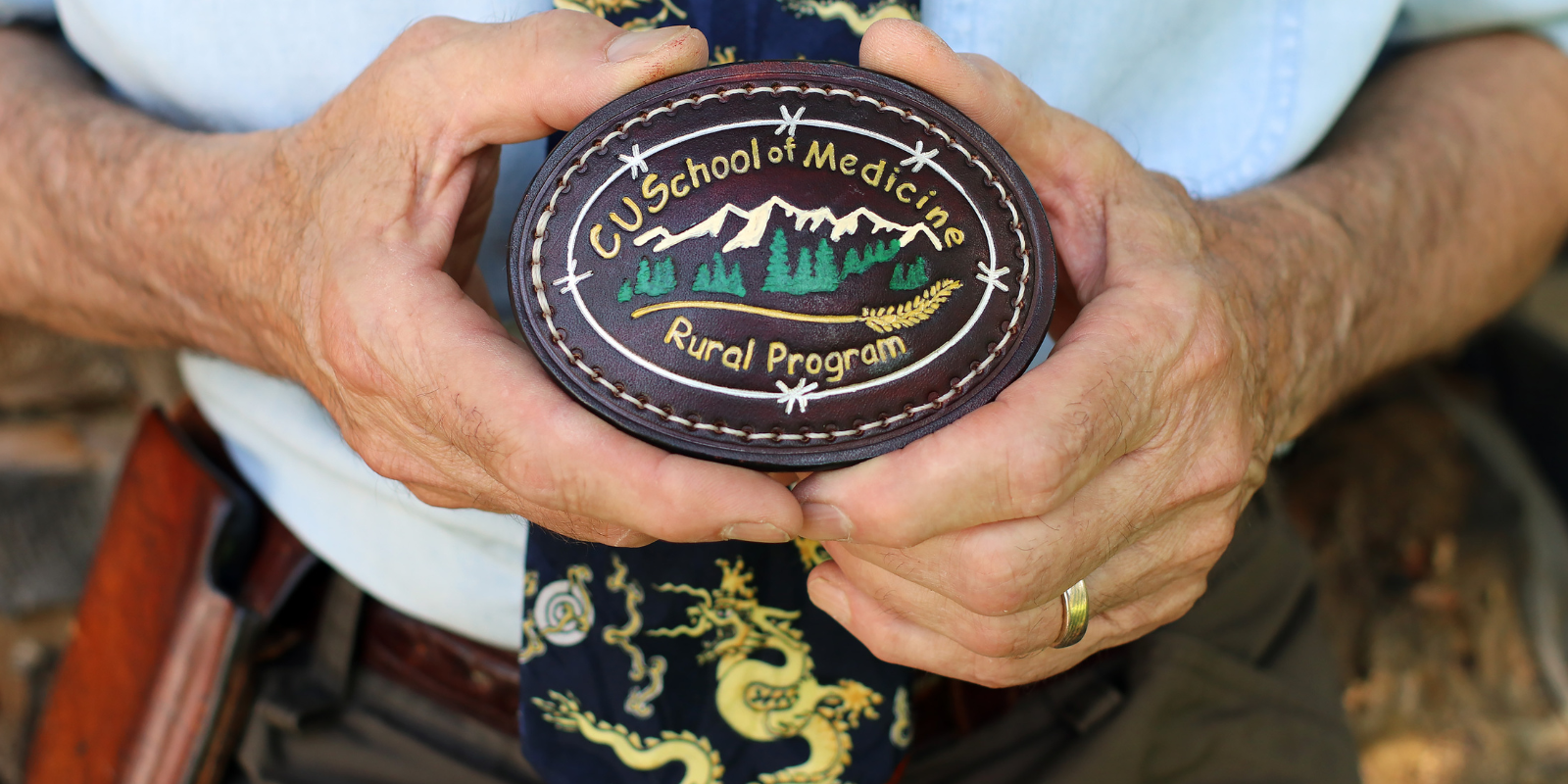
'These Students Give Us Hope': 20 Years of Rural Medicine Training
This year, the Rural Program celebrated 20 years of training CU Anschutz medical students and preparing them for careers in rural and frontier communities in Colorado and across the country.
“Our students tell us that they get increased clinical responsibility because they're basically part of a smaller team,” said program director Mark Deutchman, MD. “Students have an opportunity to follow patients through transitions of care because they’re in a smaller system. If a patient comes into the clinic and gets sent to the hospital or is seen in the emergency department and is sent to the clinic or has surgical consultants involved in their care, our students can be involved in the continuum of care quite readily.”
As Deutchman readies for retirement, he said his legacy will be the students, many of which help train the next generation of rural physicians.

CU First to Offer New Deep Brain Stimulation Treatment for Parkinson’s Disease Patients
Faculty members in the CU Anschutz School of Medicine’s Movement Disorders Center were the first in the nation to complete deep brain stimulation programming using new electrode identifier and adaptive brain stimulation technology following U.S. Food and Drug Administration approval in February.
The new programming allows a clinician to use a Parkinson’s disease patient’s own brain signals to quickly localize the area to deliver the proper amount of therapy. The breakthrough will also usher in a new era for research.
“It’s an exciting time for researchers, clinicians, and patients. This moves us forward in treating and learning more about Parkinson’s disease in ways we could only have imagined,” said Drew Kern, MD, associate professor of neurology and neurosurgery.

Doomscrolling? Kick the Habit with a Digital Detox
If ever you’ve found yourself in a loop of compulsively consuming negative news and felt anxious or drained afterward, you may have also wondered if a “digital detox” is the right move.
Earlier this year, Emily Hemendinger, MPH, LCSW, assistant professor of psychiatry, helped us understand what can make a break away from technology effective and why going cold turkey isn’t always the best approach.
Her advice still rings true months after publishing this story: Setting boundaries with social media and technology can be a positive change.

Dean Sampson Appoints New Leadership Team for the CU School of Medicine
In April, CU Anschutz School of Medicine Dean John Sampson, MD, PhD, MBA, announced key leadership changes to ensure the school maintains programs of excellence in clinical care, research, and education.
Department of Medicine Chair Vineet Chopra, MD, MBBS, MSc, became the executive vice dean overseeing clinical affairs, quality, and research operations; Shanta Zimmer, MD, senior associate dean for education, was promoted to executive vice dean overseeing education; Department of Ophthalmology Chair Naresh Mandava, MD, was named senior associate dean for strategic advancement; Leslie Berg, PhD, chair of the Department of Immunology and Microbiology, was named senior associate dean for biomedical research; and Adit Ginde, MD, professor and vice chair for research in the Department of Emergency Medicine, became the senior associate dean for clinical research and assistant vice chancellor for clinical trials in the Office of Vice Chancellor for Research.
“I have asked these outstanding leaders to think big about where we are and where we can go,” Sampson said. “… We are well-positioned to continue to grow due to the strength of our clinical practice and hospital partners.”

A Successful New Peanut Patch is Helping Improve Options for Allergy Treatment
After a years-long study, the VP250 VIASKIN Peanut patch from DBV Technologies shows promising results. The patch works by application between the shoulder blades and contains 250 micrograms of peanut protein, the equivalent of one-one thousandth of a peanut.
David Fleischer, MD, professor of pediatric allergy and immunology and director of the Allergy and Immunology Center at Children's Hospital Colorado, helped readers understand the new technology and what it could mean as a positive step for early intervention in food allergies.

Eddie Vedder Documentary Elevates a CU Pediatrician’s Clinical Focus to the Big Screen
CU Anschutz pediatrician Jamie Feinstein, MD, MPH, took his clinical expertise to the big screen this year. The professor of pediatrics was featured alongside his 10-year-old patient Rowan Holler in a new documentary that premiered at the Tribeca Film Festival called “Matter of Time.”
The documentary chronicles the efforts to find a cure for epidermolysis bullosa (EB) and musician Eddie Vedder’s dedication to the cause.
“This film brings EB to the world stage,” Feinstein said.

CU Researcher Studying Effects of GLP-1 Drugs on Alcohol Addiction
Few health topics this year were hotter than GLP-1s. Now, as researchers continue to learn more about this class of medications, they’re asking big questions about how they might be impactful in ways other than diabetes management and weight loss.
Joseph Schacht, PhD, associate professor of psychiatry and co-director of the Division of Addiction Science, Prevention, and Treatment, is investigating whether the pill form of Ozempic could also help people with alcohol use disorder reduce their cravings to drink.
“I've been working in this area for 15 years, and this is the most exciting drug we've seen in that time,” Schacht said of his research. “Some people are thinking of it as a potential ‘Prozac moment’ for alcohol and addiction. Prozac was a breakthrough drug, because it was the first effective antidepressant that was available broadly. And it seems like drugs in this class might have a similar effect for alcohol and addiction.”

CU School of Medicine Receives $64 Million NIH Award to Establish Palliative Care Research Consortium
In August, the CU Anschutz School of Medicine was chosen as the prime award institution for a $64 million award from the National Institutes of Health (NIH) to establish a consortium focused on palliative care research.
“While palliative care as a field has advanced significantly in the last few decades, there are still a lot of unmet needs,” said Jean Kutner, MD, MSPH, distinguished professor of medicine and principal investigator of the consortium. “This consortium will serve as a springboard for filling gaps and offering resources to researchers who will ultimately improve the field.”

What President Donald Trump’s Leg Swelling Diagnosis Reveals About Treatment, Risk Factors
This summer, President Donald Trump’s chronic venous insufficiency (CVI) diagnosis prompted many people to ask what exactly the condition means for health.
Vascular surgeon Emily Malgor, MD, FACS, assistant professor of surgery, explained that CVI is common and neither life- nor limb-threatening.
“The thing to know is that it is not typically dangerous, even if the presentation is very striking,” she said.
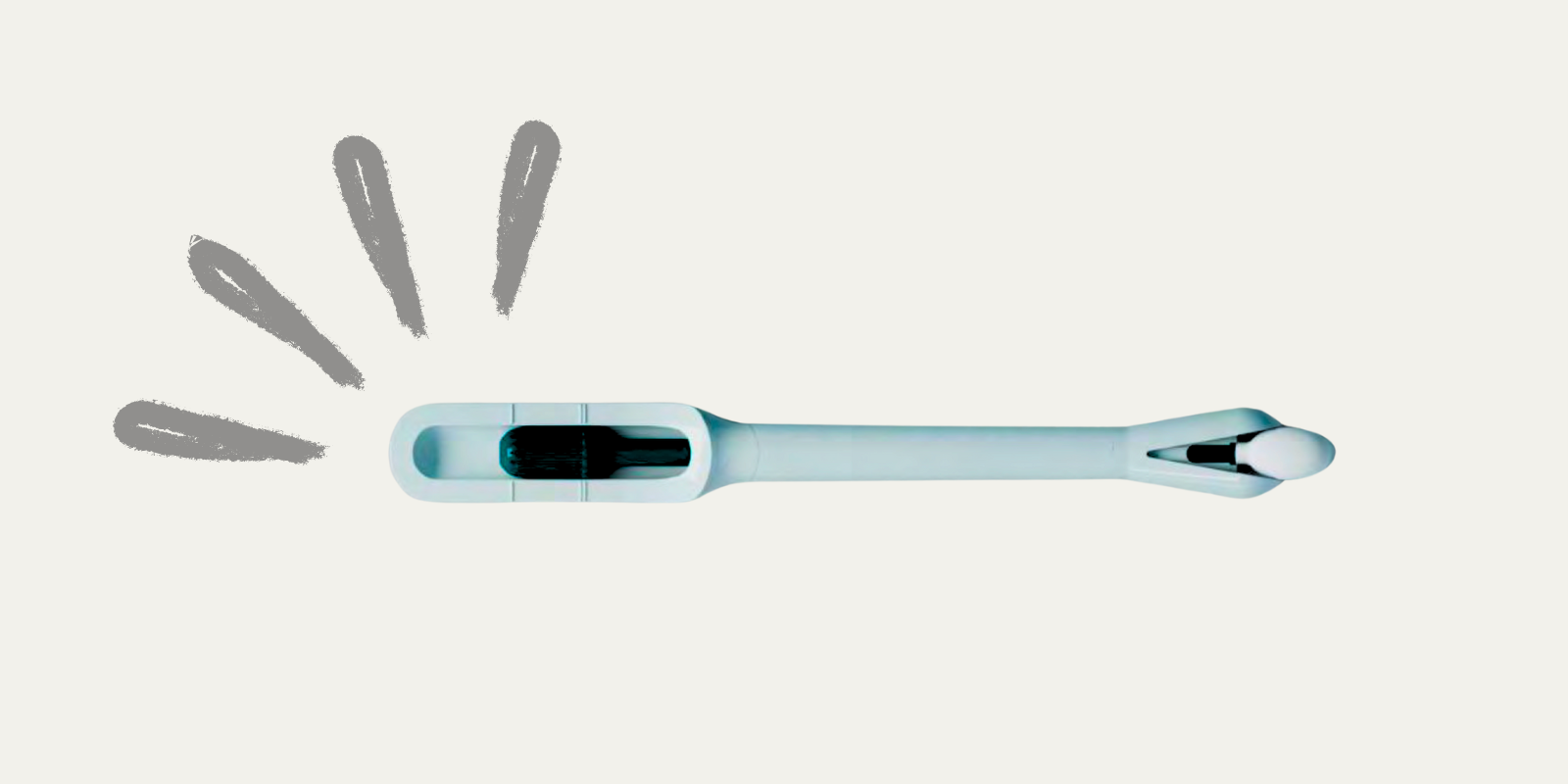
New Research Led by CU School of Medicine Validates At-Home Cervical Cancer Screening Device
News of a new at-home self-collection device for cervical cancer screenings made waves this year. That’s thanks to work by Christine Conageski, MD, MSc, associate professor of obstetrics and gynecology, who served as principal investigator for the SELF-CERV trial, which sought to validate the use of the device, called the Teal Wand.
Conageski said the device, which was approved by the FDA in May, could move the needle on the screening gap for cervical cancer.
“Ultimately, we want to decrease cervical cancer rate, and we hope that this work is going to be part of that,” she said of the Teal Wand.