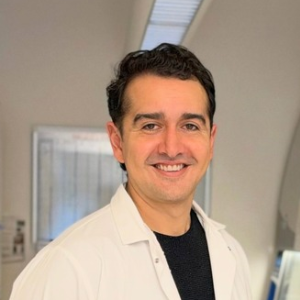
Samuel Burciaga was very young when his aunt developed breast cancer and passed away – too young, he says, for him to fully realize the impact of what had happened.
“But as you grow up and you hear stories about her from the family, you understand,” he says. “It was very traumatic and triggering for them. So I thought, what better way to give back to the world than to fight cancer? That’s what pushed me towards this. If I can contribute anything to moving the field a little bit forward toward curing cancer for everyone, that’s what I want to do.”
As a first-generation Mexican-American, someone who grew up thinking people like him weren’t well represented in science and medicine, Burciaga says he’s also motivated to spread the word that there’s a place for everyone in cancer research.
Today, Burciaga is a graduate student in immunology at the University of Colorado Anschutz, pursuing a PhD and doing research in the lab of CU Anschutz Cancer Center member Terry Fry, MD, on making patients’ immune systems better suited to fighting cancer.
Burciaga is supported by the National Cancer Institute’s Ruth L. Kirschstein National Research Service Award, known as the F31 Award. The competitive fellowship provides financial support for doctoral researchers, including a stipend, tuition assistance, and research training expenses.
He has also received an ARCS Foundation Scholar Award, a program of the Achievement Rewards for College Scientists (ARCS) Foundation, which supports PhD trainees pursuing impactful research in science, engineering, and medicine.
Burciaga also is a fellow in CU Anschutz Innovations’ Healthcare Innovation & Entrepreneurship (HIE) Initiative, a campus-wide program aimed at guiding researchers through the fundamentals of the business of science.
An ‘a-ha’ moment
Burciaga is an only child, born in Minneapolis to parents from Torreón, a city in north-central Mexico.
“At home I would speak Spanish in a Mexican household, but outside it was a very homogeneous white community,” he says. “I didn’t see any people like me in positions of authority. I didn’t feel represented.”
Burciaga’s mother had been a chemical engineer back in Mexico, “and that seemed like the coolest thing at the time, so I went into that at the University of Minnesota,” he says. But when he took a biochemistry course, he loved it. “I pivoted to that. I decided I wanted to go into the life sciences, because what's more important than health?”
After graduating from UMN in 2016 with a bachelor’s degree in biology, “I was up in the air between medicine and a PhD,” Burciaga says. “And then I went to Spain for a year to teach biology and English at a secondary school. That was an ‘a-ha’ moment. I liked teaching biology, and pursuing a PhD seemed like the right choice for me.”
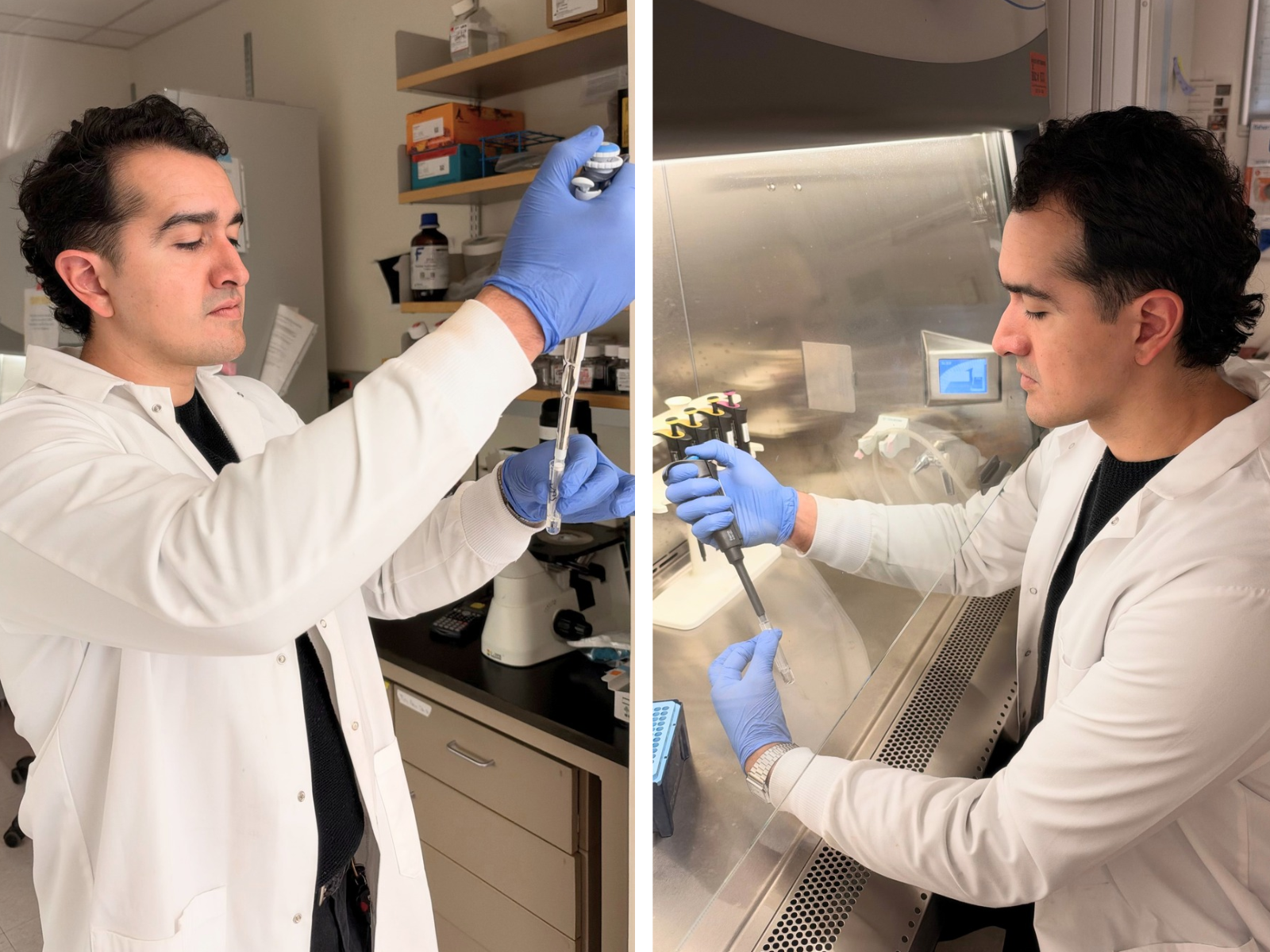
Photos provided by Samuel Burciaga.
Understanding T cells
Burciaga spent the next few years in various research positions before joining CU Anschutz in 2021 as a researcher and lab manager for Eva Nozik, MD, chair of the Department of Pediatrics’ Critical Care Medicine section, who he says helped instill in him a work ethic he draws upon in graduate school.
While at Nozik’s lab, he worked on research with Daniel Colon Hidalgo, MD, MPH, now an instructor in the CU Anschutz Division of Pulmonary, Allergy and Critical Care Medicine. “I talked earlier about seeing yourself represented,” Burciaga says. “He was born and raised in the Dominican Republic and spent a lot of time in Mexico, and he is now a leading figure in the pulmonary hypertension space. Having a role model like that pushed me towards pursuing research on my own.”
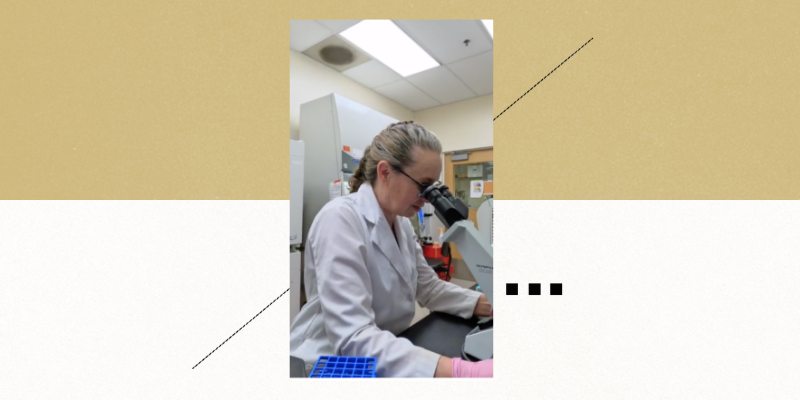
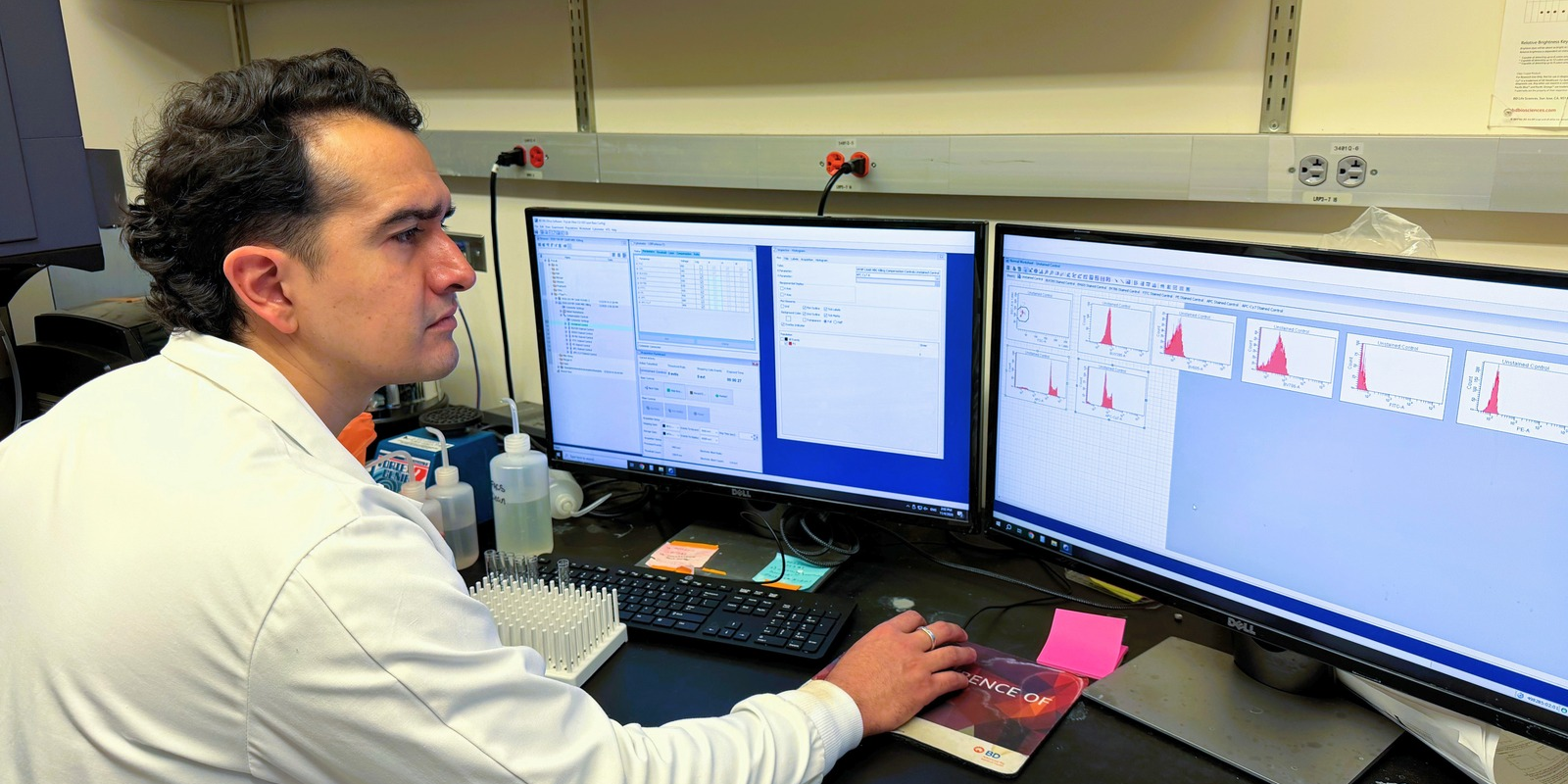
Burciaga entered graduate school at CU Anschutz in 2023 and joined Fry’s lab, where he’s investigating the biology of T cells – a weapon of the body’s immune system, its defense against infection and disease.
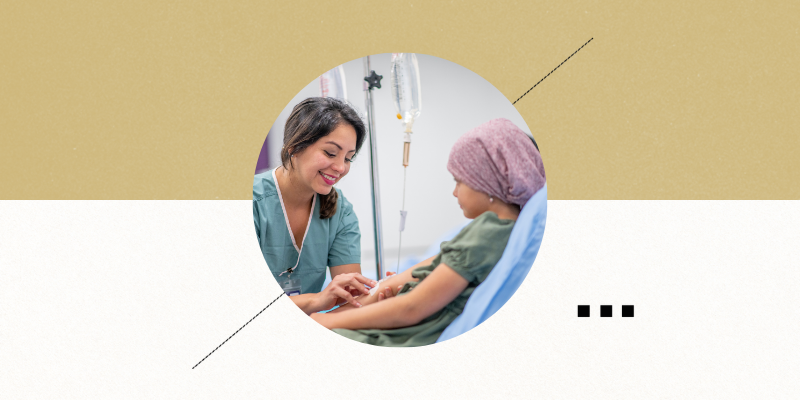
He seeks to learn more about how a T cell’s natural biology influences the potency and persistence of CAR T-cell therapies – personalized treatments in which T cells are collected and engineered to recognize cancer cells before being infused into patients to seek out and destroy tumors.
Specifically, Burciaga and his lab colleagues are investigating ways to improve CD19 CAR T-cell therapies for children with B-cell acute lymphoblastic leukemia (B-ALL), particularly those whose cancer does not respond to initial treatment (refractory) or that returns after treatment (relapsed).
“CD19 CAR-T therapies have transformed the landscape for refractory or relapsed B-ALL in pediatric patients, giving them a new shot at life,” Burciaga says. “But these therapies are not always successful, and over time they don’t always persist in working. So there's continued room for improvement, and that’s what the Fry lab is looking into – how we can better optimize these CAR therapies, and that’s where my role is.”
Pushing medicine forward
Burciaga has been investigating whether mucosal-associated invariant T (MAIT) cells, a specialized subset of T cells, could serve as an alternative starting point for CAR T-cell therapies. By comparing CAR T cells generated from MAIT cells and those from conventional T cells, he hopes to identify biological differences that may influence their effectiveness against cancer.
Burciaga sees CU Anschutz as a fruitful, collaborative environment for translating lab breakthroughs into better treatments for patients. He also says that being close to patients at the campus’ hospitals “instills urgency in everybody. We want to put these findings into the clinic as fast as possible because we want to save lives and push medicine forward.”
Burciaga’s goal is to become an independent investigator leading his own research laboratory, working on “optimizing these CAR therapies, increasing access for everyone, and also training the next generation of scientists,” he says. “Terry has instilled in me a passion for mentorship, and I want to push that along for my future students.”
Given his background, and the fact that CU Anschutz is surrounded by a highly diverse community, Burciaga also wants to “be a ladder for underrepresented minorities who don't see themselves represented so they can come into science.”
He has taken part in START, the CU Anschutz Cancer Center’s summer camp program for middle- and high-school students learning about cancer research. He has volunteered at the Aurora Science and Tech middle and high school adjacent to the campus. And he has participated in the Immunology Underrepresented Minority Success Task Force at CU Anschutz.
“I think it’s important for people like me to volunteer for things like this, tell our stories, and help bridge the gap,” he says. “I want to say, ‘Hey, I’m here. You guys can be here, too.’ I want to meet people where they're at, and tell them there’s space here for everyone.”