When Ross Bagully was diagnosed with the blood cancer myelodysplastic syndrome (MDS) 12 years ago, after routine tests showed that he had low blood counts, he was still able to continue doing the things he enjoyed. The Denver resident and his wife walked four or five miles a day and traveled frequently to Europe and South America—including to their house in Buenos Aires, Argentina—where they enjoyed going to restaurants to sample the local cuisine.
Many people with MDS experience anemia or neutropenia, often requiring blood transfusions or other treatments, but Bagully seemed unaffected by the condition. As time went on, his blood counts not only weren’t getting worse — they were actually getting better.
The supplement that helped
His hematologist, University of Colorado Anschutz Cancer Center member Maria Amaya, MD, PhD, wanted to know why.
“Ross is a world traveler, so he would go to Europe or Argentina for a few months and then come back. And every time that he came to visit me, his hemoglobin would look a little bit better,” says Amaya, program liaison for Developmental Therapeutics at the cancer center. “I asked him, ‘Ross, are you doing anything differently? Because I'm not treating your MDS, and your hemoglobin's getting better.’ And he told me, ‘Yes, I've been taking a supplement.’"
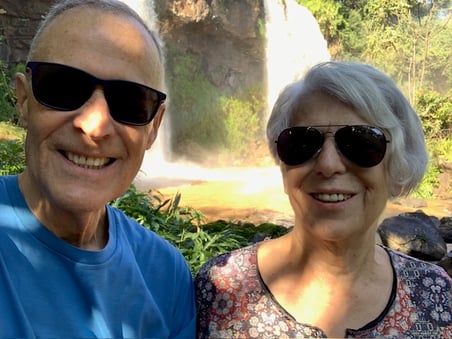 Ross Bagully and his wife, Patsy, at Iguazu Falls in South America.
That supplement, a form of vitamin B3 called nicotinamide riboside, is converted in the body to nicotinamide adenine dinucleotide (NAD+), a coenzyme that has been shown to improve blood health. Bagully’s daughter, who is a biochemist and PhD, read about the supplement shortly after her father was diagnosed with MDS.
“She has spent 30 years leading clinical trials and is as knowledgeable about oncology and all cancers as anybody that I know,” Bagully says of his daughter. “She follows blood cancers very thoroughly — even more so since I became a patient.”
Designing a clinical trial
Amaya is now leading a clinical trial at the CU Anschutz Cancer Center that is measuring the effects of nicotinamide riboside in early-stage MDS patients to see if they have an increase in hemoglobin levels like the one Bagully experienced. Amaya named the trial the ROSS trial in Bagully’s honor.
“I do think that his healthy blood cells were getting healthier because of the supplement he was taking, and it was really helping him with his anemia,” says Amaya, assistant professor of hematology in the CU Anschutz School of Medicine. “With these patients, if you don't treat them, eventually the MDS progresses to acute myeloid leukemia, or their anemia gets worse in such a way that they need blood transfusions. But his quality of life was so good because he wasn't coming in and getting blood transfusions or getting treatments. That's what led us to say, ‘Why don't we turn this into a clinical trial?’ It may work for a subset of patients or maybe for all patients, but we don't know until we try.”
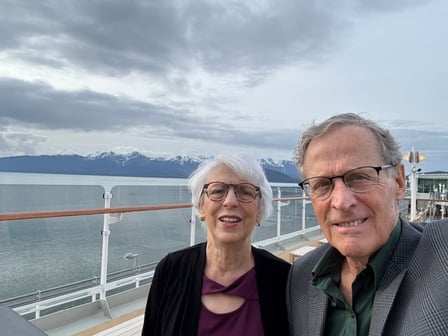 Bagully and Patsy on a cruise from Tokyo to the U.S..
Funded by the CU Anschutz Cancer Center and the Cancer League of Colorado, the pilot study aims to enroll 10 patients to see if the supplement will improve their anemia and quality of life. An associated survey will ask about fatigue and energy levels. And while anemia levels in people with MDS isn’t directly correlated with progression to AML, the clinical trial is also looking to see if nicotinamide riboside has any effect on the timeline.
“We don't think it's going to cure MDS, but one of the questions we're going to ask is, ‘Is it just the anemia that's getting better, or is the pill also modifying the cancer in such a way that it delays the progression of AML?’” Amaya says. “Did Ross progress to AML later than he would have otherwise if he wasn't taking the pill? We don't know.”
Although the supplement represents an area of scientific interest, further research is needed to establish its safety and clinical benefit, Amaya says. Its use should be considered in consultation with one’s treating health care team, ideally within a clinical trial.
Progression to AML
For Bagully, that progression happened in November 2025 when he was at his home in Buenos Aires and his energy levels began to flag.
“I remember writing to Maria and saying, ‘I don't feel terrible. I just don't feel the same,’” he says. “My wife and I routinely walk long distances all the time — five or six miles a day — and I was getting tired walking. I was walking slower. I had to rest. When I got into a hospital there and got blood work, my hemoglobin had dropped from 11 or 12 down to around five. Platelets were down to 20 or 30. Everything went to hell very quickly.”
Bagully received multiple blood transfusions at the hospital in Argentina, and two days later he got on a plane for an overnight flight to Denver. He went straight from the airport to the emergency room, and Amaya met him there.
“This was on Thanksgiving Day,” he says. “She's phenomenal. Thank God for Maria Amaya. She's a fabulous doctor, and I'm convinced if it wasn't for her, I wouldn't be alive.”
Living life again
Bagully received additional treatment over the next few months and in March 2026 received a stem cell transplant.
“That fixed it, he says. “I'm feeling fabulous. We've been walking four or five miles a day again, I’m doing weights three times a week, and eating well. Now I'm back to being concerned about keeping my weight down, as opposed to trying to put it on. That's a good place to be.”
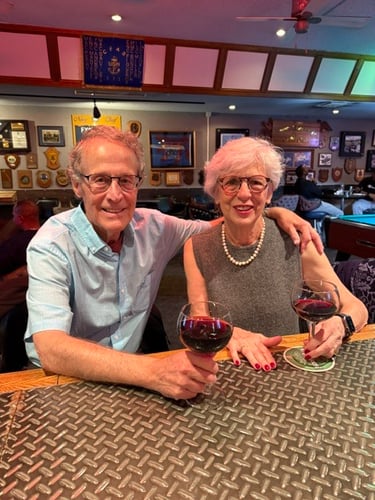 Bagully and Patsy at a favorite restaurant in Buenos Aires.
He’s also gratified by the clinical trial that bears his name and hopes it will help others who are in the situation he was in 12 years ago.
“Maybe I was just lucky, but maybe that’s what made the difference,” he says. “I'm glad Maria is going to find out.”
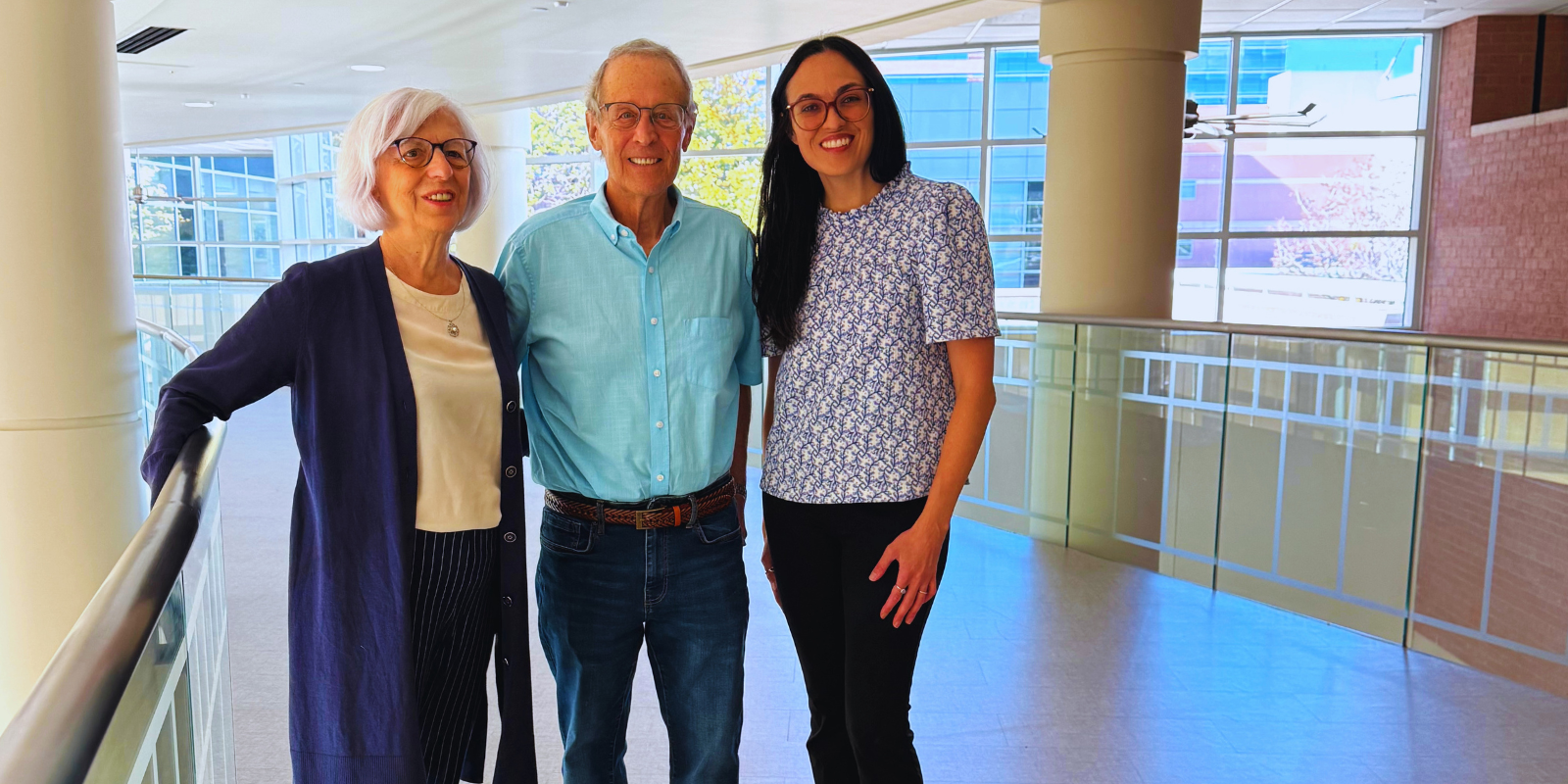
Featured image: Ross Bagully and his wife, Patsy, with Maria Amaya, MD, PhD.