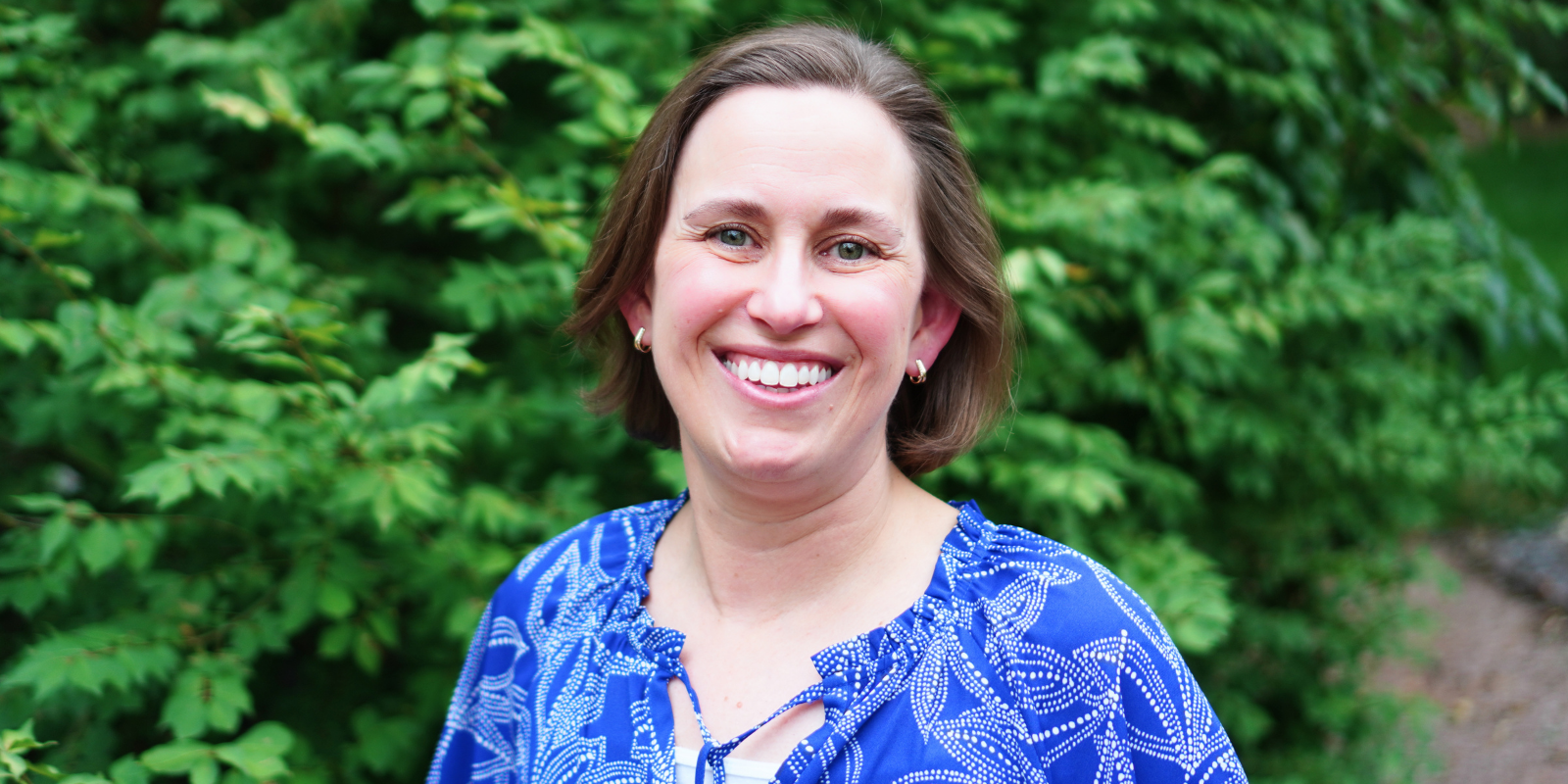
Michele Frishman had known for years she had an elevated risk of breast cancer because of her family history. She also had heard of mutations of BRCA genes that are associated with higher cancer risk – mutations that crop up more frequently among people, like herself, in the Jewish community.
When she was 32, she found a lump in her breast that turned out to be benign.
But, while she was getting high-risk monitoring for breast cancer, Frishman did not seek out genetic testing to find out whether she carried a BRCA mutation that could raise her cancer risk.
“I felt like I didn't want to know if I would be facing cancer in the future,” Frishman says. “At the time, I figured, ‘If it happens to me, I'll deal with it when the time comes.’”
Then, during her 40s, “I started seeing way too many people my age going through breast cancer. That made it feel more real to me.”
Last year, Frishman learned of an ongoing study called CU-GENES, for Genetic Engagement, Education, and Screening, that provides free at-home genetic testing to Colorado adults of Jewish ancestry.
A companion study, CU-GENES-2, offers genetic testing to Hispanic people with roots in the San Luis Valley of southern Colorado and northern New Mexico who are thought to be more likely to carry a specific mutation linked to cancer risk.
The studies are led by University of Colorado Anschutz Cancer Center member Christine Walsh, MD, MS. “We’re trying to empower people with information so they can be proactive before a cancer diagnosis instead of reactive after a diagnosis,” says Walsh, division chief and professor in the CU Anschutz Department of Obstetrics and Gynecology’s Division of Gynecologic Oncology. Walsh holds the Don and Arlene Mohler-Johnson Family Chair in ovarian cancer.
→ What Women of Eastern European Jewish Ancestry Should Know About Their Cancer Risk
BRCA mutation’s impact
DNA is the material in cells that contains the biological blueprint for living things. Genes are the pieces of DNA that contain the code for individual inherited traits – brown eyes, for example.
All humans have a pair of BRCA genes, BRCA1 and BRCA2, often pronounced “brack-uh” – short for BReast CAncer gene. Normally, these genes have a cancer-suppression role, producing proteins that tamp down tumor growth and repair DNA.
When a BRCA gene is mutated – damaged or changed in some way – it may no longer suppress tumors, meaning certain cancers, especially breast and ovarian cancer, are more likely to occur. And a mutated gene can be passed down from generation to generation.
According to the National Cancer Institute, while about 13% of women will develop breast cancer during their lifetime, that rate is more than 60% for women with a BRCA1 or BRCA2 gene mutation. Breast cancer is rare among men, but a BRCA mutation also carries an elevated risk for men.
As for ovarian cancer, about 1.1% of women will develop it during their lifetime, but the rates are 39%-58% of women with a BRCA1 mutation and 13%-29% of women with a BRCA2 mutation.
BRCA mutations are also associated with higher risk of pancreatic cancer and prostate cancer among men. And there is some research associating BRCA1 mutations with a higher risk of a rare type of uterine cancer.
→ What Genetic Testing Can Reveal about Hereditary Cancer Conditions
A silent phenomenon
It’s estimated that only about one in 400 people carry a BRCA gene mutation. But the rate is much higher among Jewish people.
“If you take all individuals with Jewish ancestry, one in 40 has a pathogenic variant in BRCA1 or BRCA2, and that's a tenfold higher risk than in the general population,” Walsh says.
Meanwhile, groundbreaking 2003 research co-authored by CU Anschutz Cancer Center member Marie Wood, MD, described a specific BRCA1 mutation called 185delAG among Hispanic people living in the San Luis Valley. The mutation is most commonly found among people of Ashkenazi Jewish heritage – an ethnic subdivision whose ancestors lived centuries ago in Central and Eastern Europe.
Later research suggested that some Jewish people may have come to the Americas long ago to escape persecution in Europe and settled in the valley, and that their descendants may be unaware of their ethnic heritage because their ancestors had converted to Catholicism.
“No one has done a study looking to see what the rate of BRCA mutation is” in the San Luis Valley Hispanic population, Walsh says. “It’s a silent phenomenon. There are no symptoms. You just get cancer one day, you get tested, and you find out you were born with an elevated risk of cancer. So we’re trying to figure out how prevalent it is and to empower people who test positive to have information they can use to reduce their personal cancer risk.”
Scary information
Both CU-GENES studies, which began in late 2023, are still open to participants. As of August, 455 Coloradans of Jewish ancestry had enrolled in CU-GENES, 332 have completed testing, and over 2.5% have tested positive for a BRCA mutation, Walsh says.
As for CU-GENES-2 involving the San Luis Valley Hispanic community, 80 people were enrolled as of June, 60 had been tested, and there was one person who tested positive for a gene mutation, she says.
Study participants meet with Walsh’s research team and then contact Myriad Genetics, the study’s genetic testing partner. “They talk about their family and personal history and they learn about the implications of genetic testing and what types of results they might get back,” Walsh says. “Then they do the genetic testing. Afterwards, if they test positive, they meet with a genetic counselor to understand the implications of their test results and the options they have to reduce their cancer risk. We also provide them resources where they can connect with care, including at our cancer center.”
Participants must be age 25 or above with no prior genetic testing. The research team is assessing how well the testing program works in terms of signing up participants, and how satisfied enrollees are with the process. Those results may inform future genetic-testing outreach projects.
“This can be scary information to seek, so we’re trying to figure out how to make the process as seamless as possible,” Walsh says.
The BRCA Initiative, a coalition of the Colorado Gynecologic Cancer Alliance and various Colorado Jewish community centers, is helping to promote CU-GENES.
“Ovarian cancer has one of cancer's highest hereditary connections,” says Patrice Hauptman, executive director of the Colorado Gynecologic Cancer Alliance. “But because there is no screening test, most women are diagnosed at a deadly late stage. We've always wanted to find a way to get to high-risk people with genetic testing. The CU-GENES study finally made that possible.”
→ CU Anschutz Cancer Center Research Aids in the Fight Against Ovarian Cancer
‘A bit of a shock’
Frishman, an Aurora resident, is married with a daughter in college and a son in high school. She has Jewish ancestry on both her mother’s and father’s side. Both her mother and her paternal grandmother had breast cancer in their 50s and survived.
In summer 2025, an acquaintance in the Jewish community posted on Facebook about the CU-GENES study. “I read up on it, and thought I could do this testing for free, and be able to provide some helpful information to the people doing the study,” Frishman says.
Frishman received the test kit in the mail and returned a saliva sample for testing. About three weeks later, three days before her 48th birthday, she learned she had tested positive for a BRCA1 mutation. “I can’t say it was a huge surprise because of my family history and ancestry, but it was still a bit of a shock,” she says.
Frishman and her husband spoke with a genetic counselor about her situation and options. When her gynecologist saw her genetic test results, she immediately referred Frishman to oncologists for further testing.
Frishman could have started an accelerated screening schedule for ovarian and breast cancer every six months, “but to me that would have been more stressful, constantly worrying and waiting for cancer to show up. I didn’t want to wait, and my doctors didn’t, either.”
So she decided to have prophylactic surgery – removing healthy organs to prevent disease. In January, she had her uterus, cervix, ovaries, and fallopian tubes removed. Three and a half weeks later, she had a double mastectomy. No signs of cancer were found.
“I’m really glad I did it,” Frishman says. Her doctors told her the surgeries resulted in a 95% cancer risk reduction.
→ Genetic Counseling Helps Young Woman Take Control After Testing Positive for BRCA2
‘It could save your life’
Frishman’s husband also signed up for CU-GENES and tested negative for a BRCA mutation. She has been advised to encourage her children to seek genetic testing once they’re adults.
Also, Frishman has become an advocate of genetic testing for Jewish people. She recorded a Facebook video for the BRCA Initiative on her experiences. And she is volunteering as a peer supporter with Sharsheret (Hebrew for “chain”), a national organization supporting Jewish women and families facing breast and ovarian cancer.
“I recognize that not everybody who has a BRCA mutation will choose the same path that I did,” she says. “But you won't be able to make the best choice for yourself if you don't have the information first. It could save your life.”
“Michele has been incredibly proactive,” Walsh says. “She has dramatically reduced her risk of developing a cancer that is potentially life threatening.”
More than half a year after her surgeries, “I feel great,” Frishman says. “I got back to my normal life pretty quickly, and I feel physically very well and strong again. I'm a very active person – I love to hike, do yoga, pilates, and strength training. They can’t tell me 100% that I will never get these cancers, but the risk is so reduced now that I don’t worry about it anymore. I just feel a huge relief.”
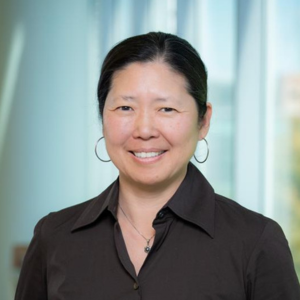
Photo at top: Michele Frishman. Photo provided by Michele Frishman.
VIDEO: Michele Frishman is interviewed about her genetic testing experience by Kim Christiansen of Denver television station KUSA-9NEWS.